13 Moon Calendar Download

Some of the elements used were also used by the Mayan priests, among them were keepers/guardians of time. Most of the people had no way to keep track of the days, seasons, years... However, time was important, they had to sow at the right time of the year, prepare for the cold... The priests and calender systems played an important role in the lifes of the people of the Maya's.
This version can show the galactic signature, the destiny oracle, the wavespell, the tzolkin, 13 moon calendar and moon phases and has a widget for the home screen to show the current date.
When the app is installed permission will be asked to access your files. This permission is required to share a screenshot, because the app will have to save an image file to your storage before sharing it.
Available languages: English, Chinese, Russian, Spanish and Dutch.
Follow us on http://www.facebook.com/AnotherWorldNetworks
The Dreamspell is originally created by José Argüelles and is maintained by www.lawoftime.org
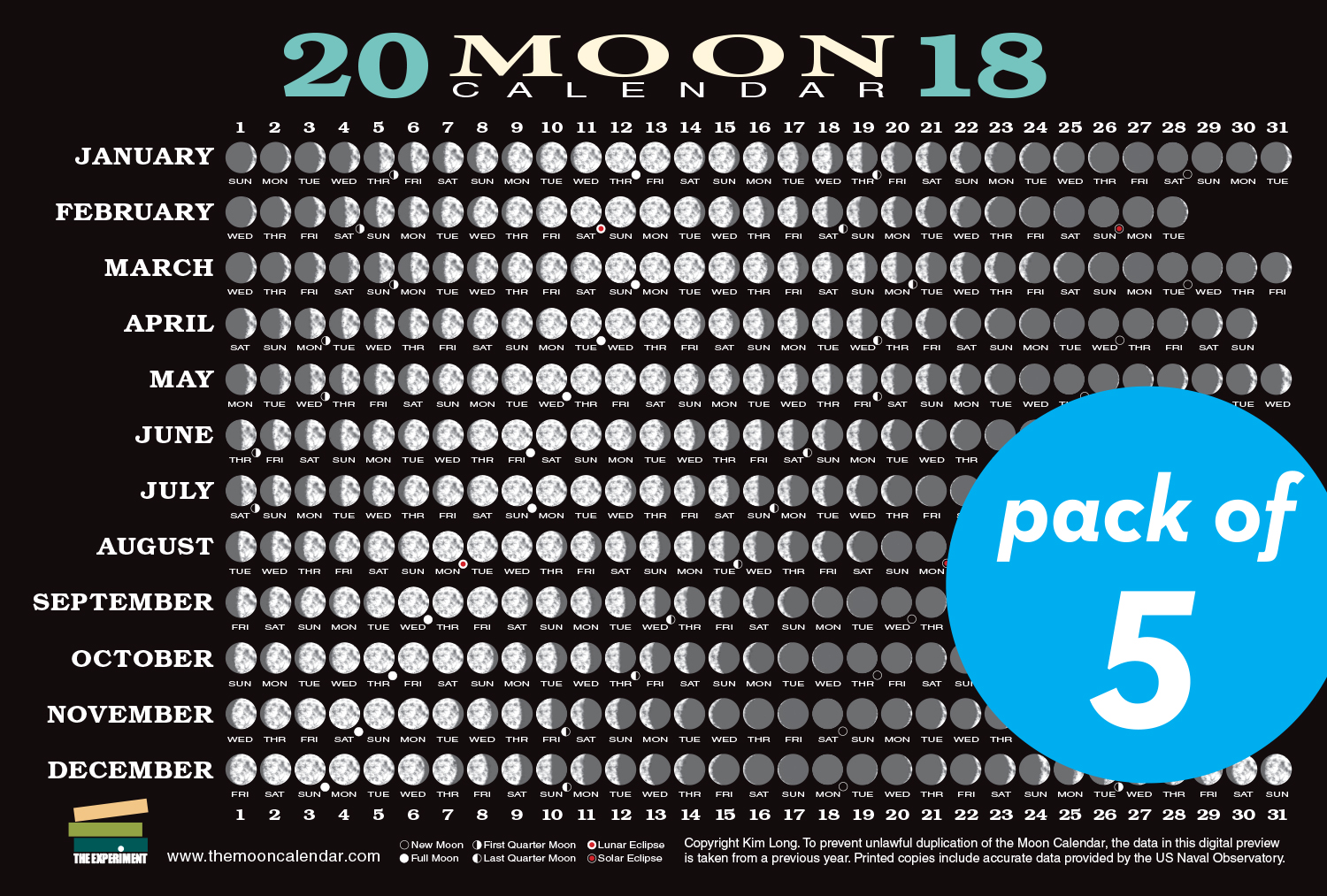
A lunar calendar is a calendar based upon the monthly cycles of the Moon's phases (synodic months), in contrast to solar calendars, whose annual cycles are based only directly upon the solar year. The most commonly used calendar, the Gregorian calendar, is a solar calendar system that originally evolved out of a lunar calendar system. A purely lunar calendar is also distinguished from a lunisolar calendar, whose lunar months are brought into alignment with the solar year through some process of intercalation. The details of when months begin varies from calendar to calendar, with some using new, full, or crescent moons and others employing detailed calculations.
Since each lunation is approximately 291⁄2 days (29 days, 12 hours, 44 minutes, 3 seconds, or 29.530588 days), it is common for the months of a lunar calendar to alternate between 29 and 30 days. Since the period of twelve such lunations, a lunar year, is only 354 days, 8 hours, 48 minutes, 34 seconds (354.367056 days), purely lunar calendars lose around 11 days per year relative to the Gregorian calendar. In purely lunar calendars like the Islamic calendar, the lack of intercalation causes the lunar months to cycle through all the seasons of the Gregorian year over the course of a 33 lunar-year cycle.
Although the Gregorian calendar is in common and legal use in most countries, traditional lunar and lunisolar calendars continue to be used throughout the Old World to determine religious festivals and national holidays. Examples of such holidays include Ramadan (Islamic calendar); Easter; the Chinese, Japanese, Korean, Vietnamese, and Mongolian New Year (Chinese, Japanese, Korean, Vietnamese, and Mongolian calendars); the Nepali New Year (Nepali calendar); the Mid-Autumn Festival and Chuseok (Chinese and Korean calendars); Loi Krathong (Thai calendar); Sunuwar calendar; Vesak/Buddha's Birthday (Buddhist calendar); Diwali (Hindu calendars); and Rosh Hashanah (Hebrew calendar).
History[edit]
The earliest known lunar calendar was found at Warren Field in Scotland and has been dated to c. 8000BC, during the Mesolithic period.[1] Some scholars argue for lunar calendars still earlier—Rappenglück in the marks on a c. 17,000 year-old cave painting at Lascaux and Marshack in the marks on a c. 27,000 year-old bone baton—but their findings remain controversial.[2][3]
Lunisolar calendars[edit]
Most calendars referred to as 'lunar' calendars are in fact lunisolar calendars. Their months are based on observations of the lunar cycle, with intercalation being used to bring them into general agreement with the solar year. The solar 'civic calendar' that was used in ancient Egypt showed traces of its origin in the earlier lunar calendar, which continued to be used alongside it for religious and agricultural purposes. Present-day lunisolar calendars include the Chinese, Hindu, and Thai calendars.
Synodic months are 29 or 30 days in length, making a lunar year of 12 months about 11 days shorter than a solar year. Some lunar calendars do not use intercalation, such as most Islamic calendars. For those that do, such as the Hebrew calendar, the most common form of intercalation is to add an additional month every second or third year. Some lunisolar calendars are also calibrated by annual natural events which are affected by lunar cycles as well as the solar cycle. An example of this is the lunar calendar of the Banks Islands, which includes three months in which the edible palolo worm mass on the beaches. These events occur at the last quarter of the lunar month, as the reproductive cycle of the palolos is synchronized with the moon.[4]
Start of the lunar month[edit]
Lunar and lunisolar calendars differ as to which day is the first day of the month. In some lunisolar calendars, such as the Chinese calendar, the first day of a month is the day when an astronomical new moon occurs in a particular time zone. In others, such as some Hindu calendars, each month begins on the day after the full moon or the new moon. Others were based in the past on the first sighting of a lunar crescent, such as the Hebrew calendar and the Hijri calendar.
Length of the lunar month[edit]
The length of each lunar cycle varies slightly from the average value. In addition, observations are subject to uncertainty and weather conditions. Thus to avoid uncertainty about the calendar, there have been attempts to create fixed arithmetical rules to determine the start of each calendar month.
The average length of the synodic month is 29.530587981 days. Thus it is convenient if months generally alternate between 29 and 30 days (sometimes termed respectively “hollow” and “full”). The distribution of hollow and full months can be determined using continued fractions, and examining successive approximations for the length of the month in terms of fractions of a day. In the list below, after the number of days listed in the numerator of the fraction in the first columns, an integer number of months as listed in the denominator have been completed; the second column records the deviation accumulated with respect to the true synodic month duration and the time needed to achieve that deviation:
| Fraction | Approximate deviation |
|---|---|
| 29/1 | 1 day after about 2 months |
| 30/1 | 1 day after about 2 months |
| 59/2 | 1 day after about 2.6 years |
| 443/15 | 1 day after about 30 years |
| 502/17 | 1 day after about 70 years |
| 945/32 | 1 day after about 122 years |
| 1447/49 | 1 day after about 3 millennia |
| 25101/850 | Not accurate due to the multi-millennial change of the synodic month length. |
These fractions can be used to construct a lunar calendar, or in combination with a solar calendar to produce a lunisolar calendar. A 49-month cycle was proposed as the basis of an alternative Easter computation by Isaac Newton around 1700.[5] The tabular Islamic calendar's 360-month cycle is equivalent to 24×15 months, minus a correction of one day.
List of lunar calendars[edit]
See also[edit]
- Chinese, Japanese, Korean, Vietnamese, and Mongolian calendars
- Iranian and Hebrew calendars
References[edit]
- ^Nancy Owano, Scotland lunar-calendar find sparks Stone Age rethink, Phys.org, 27 July 2013Archived 9 August 2013 at the Wayback Machine
- ^James Elkins, Our beautiful, dry, and distant texts (1998) 63ff.
- ^'Oldest lunar calendar identified'. BBC News. 2000-10-16. Retrieved 2013-03-14.
- ^R.H.Codrington. The Melanesians: Their anthropology and folklore (1891) Oxford, Clarendon Press
- ^Reform of the Julian Calendar as Envisioned by Isaac Newton by Ari Belenkiy and Eduardo Vila Echagüe (pdf); Notes and Records of the Royal Society of London (vol. 59, no. 3, pp. 223–254).